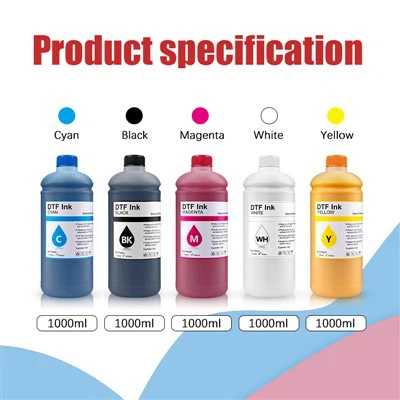
In the modern world of printing, various types of inks are used for different printing applications. As a DTF (Direct to Film) Ink supplier, I often encounter questions about the differences between DTF Ink and other printing inks. This blog post aims to shed light on these differences, helping you understand which ink is best suited for your specific printing needs.
1. Composition and Chemical Properties
DTF Ink
DTF ink is a specialized type of ink formulated for direct - to - film printing. It typically consists of pigments, binders, solvents, and additives. The pigments are responsible for the color, and they are designed to adhere well to the film and then transfer effectively to the fabric or other substrates. The binders help the ink to stick together and form a durable layer on the substrate after transfer. Solvents are used to control the viscosity of the ink, ensuring smooth printing. Additives can include things like anti - clogging agents, which are crucial for maintaining the performance of the print heads.
For example, Ocbestjet DTF Ink For Epson L1800 i3200 4720 is formulated with high - quality pigments and advanced binders. This ensures vivid colors and excellent adhesion when transferred to various fabrics.
Other Printing Inks
- Screen Printing Inks: These inks are usually thicker in consistency compared to DTF inks. They are made up of pigments, resins, and solvents. The resins in screen - printing inks are designed to cure quickly, often through a heat - curing process. Screen - printing inks are known for their opacity, which is important when printing on dark fabrics. However, they may require more complex setup and cleanup processes.
- Inkjet Inks for General Use: These inks are designed for a wide range of printing applications, such as printing on paper. They are often water - based and have a lower viscosity compared to DTF inks. Their pigments are formulated to dry quickly on paper, but they may not adhere well to fabric without special treatment.
2. Printing Process
DTF Printing Process
The DTF printing process involves several steps. First, the design is printed onto a special film using DTF ink. Then, a powder adhesive is applied over the printed design on the film. After that, the film with the design and adhesive is placed on the substrate (such as fabric), and heat and pressure are applied using a heat press. This causes the ink and adhesive to transfer from the film to the substrate.

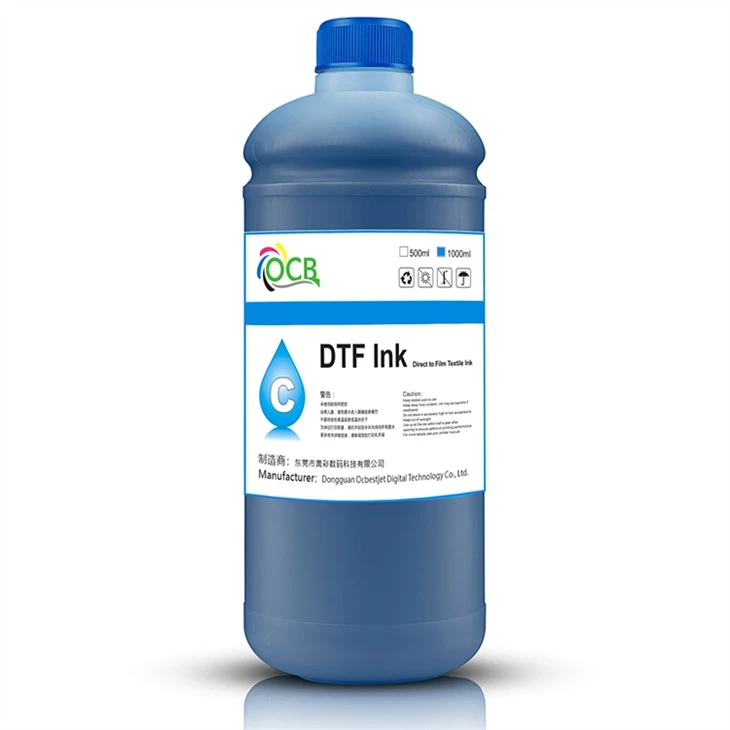
For instance, 250Ml Oeko Tex Custom Producer Manufacturers ultra Bright No Clog DTF Ink For Epson L1800 Inkjet Printer is suitable for this process. It can be printed smoothly on the film, and the resulting design can be transferred to fabrics with high precision.
Other Printing Processes
- Screen Printing: In screen printing, a stencil is created on a mesh screen. Ink is then forced through the open areas of the screen onto the substrate. This process is great for large - scale production of simple designs, but it is less suitable for complex or detailed designs. It also requires a significant amount of setup time for each new design.
- Inkjet Printing on Paper: This is a straightforward process where the inkjet printer sprays tiny droplets of ink onto the paper according to the digital design. There is no need for a transfer step as in DTF printing, but it is limited to paper - based applications.
3. Print Quality
DTF Ink
DTF ink can produce high - quality prints with excellent color accuracy and detail. Since the ink is transferred to the substrate with the help of an adhesive, it can cover a wide range of fabrics, including cotton, polyester, and blends. The prints are also durable, with good resistance to washing and fading.
For example, 500ML Film Transfer DTF Textile Ink can create sharp and vivid prints on various textile materials. The transferred ink forms a smooth and even layer on the fabric, resulting in a professional - looking finish.
Other Printing Inks
- Screen Printing: While screen - printed designs can be very durable, they may lack the fine detail that DTF printing can achieve. The edges of the design may be slightly rougher, especially for complex designs. However, screen - printed designs can have a more textured look, which some customers prefer.
- Inkjet Inks for Paper: These inks can produce high - quality prints on paper, but when it comes to fabric, the print quality may be poor. The ink may not adhere well, leading to smudging or fading after washing.
4. Cost - effectiveness
DTF Ink
In the long run, DTF ink can be cost - effective, especially for small - to - medium - scale production. The setup cost is relatively low compared to screen printing, as there is no need to create expensive stencils. The ink consumption is also more efficient, as it is only used where the design is printed on the film.
Other Printing Inks
- Screen Printing: For large - scale production, screen printing can be cost - effective due to its high - speed production capabilities. However, the initial setup cost for creating screens and stencils can be quite high, making it less suitable for small - quantity orders.
- Inkjet Inks for Paper: These inks are generally inexpensive for paper - based printing. But when trying to use them for fabric printing, additional costs may be incurred for special treatments to make the ink adhere to the fabric.
5. Environmental Impact
DTF Ink
Many DTF inks are formulated to be more environmentally friendly. They often use water - based solvents, which reduce the emission of volatile organic compounds (VOCs). Additionally, the DTF printing process produces less waste compared to some other printing methods, as the film can be reused in some cases.
Other Printing Inks
- Screen Printing Inks: Some screen - printing inks may contain solvents that release VOCs, which can be harmful to the environment and human health. The cleanup process also generates a significant amount of waste, including used screens and cleaning solutions.
- Inkjet Inks for General Use: Water - based inkjet inks for paper are relatively environmentally friendly. However, when used in combination with special treatments for fabric printing, the overall environmental impact may increase.
If you are looking for high - quality DTF ink for your printing needs, whether it's for small - scale custom projects or large - scale production, we are here to help. We offer a wide range of DTF inks, including Ocbestjet DTF Ink For Epson L1800 i3200 4720, 250Ml Oeko Tex Custom Producer Manufacturers ultra Bright No Clog DTF Ink For Epson L1800 Inkjet Printer, and 500ML Film Transfer DTF Textile Ink. Contact us to discuss your requirements and start a successful printing partnership.
References
- "Printing Ink Technology" by John Wiley & Sons
- "The Handbook of Textile Printing" by S. M. Burkinshaw