Hey there! As a supplier of textile ink for DTG (Direct-to-Garment) printers, I often get asked if our inks are eco-friendly. It's a hot topic these days, and for good reason. With more and more people becoming environmentally conscious, the demand for sustainable products is on the rise. So, let's dive into this question and see if textile ink for DTG printers can really be eco-friendly.
First off, let's talk about what makes an ink eco-friendly. Generally, an eco-friendly ink should have minimal impact on the environment throughout its life cycle. This includes the raw materials used in its production, the manufacturing process, its use, and its disposal.
Raw Materials
The raw materials used in textile inks can vary widely. Some traditional inks are made from petroleum-based chemicals, which are not only non-renewable but can also be harmful to the environment. These inks may contain heavy metals, volatile organic compounds (VOCs), and other toxic substances that can pollute the air, water, and soil.
On the other hand, many modern textile inks are made from more sustainable materials. For example, some inks use natural dyes derived from plants, fruits, and vegetables. These natural dyes are biodegradable and have a much lower environmental impact compared to their synthetic counterparts.
At our company, we're committed to using sustainable raw materials in our textile inks. We source our ingredients from reliable suppliers who adhere to strict environmental standards. Our inks are free from heavy metals and harmful chemicals, making them a safer choice for both the environment and the end-users.
Manufacturing Process
The manufacturing process of textile inks also plays a crucial role in determining their eco-friendliness. Traditional ink manufacturing can be energy-intensive and generate a significant amount of waste. However, many ink manufacturers are now adopting more sustainable practices to reduce their environmental footprint.
For instance, some companies are using renewable energy sources, such as solar or wind power, to run their manufacturing facilities. They're also implementing waste reduction and recycling programs to minimize the amount of waste generated during the production process.
We take pride in our manufacturing process, which is designed to be as eco-friendly as possible. We use state-of-the-art equipment and technologies to optimize energy efficiency and reduce waste. Our production facilities are regularly audited to ensure compliance with environmental regulations.
Use and Disposal
Once the ink is used in a DTG printer, its environmental impact continues. Some inks may require a lot of water for cleaning the printer or fixing the ink on the fabric, which can lead to water wastage. Additionally, if the ink is not properly disposed of, it can end up in landfills or water bodies, causing pollution.
To address these issues, we offer inks that are easy to clean and require less water. Our inks also have excellent adhesion properties, which means they can be fixed on the fabric with minimal heat and energy. When it comes to disposal, we provide guidelines on how to safely and responsibly dispose of our inks to minimize their environmental impact.
Our Product Range
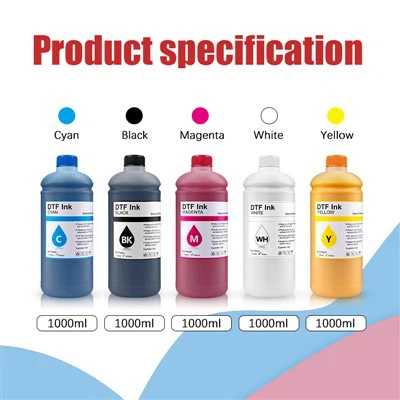
We offer a wide range of textile inks for DTG printers that are not only eco-friendly but also high-quality. Here are some of our popular products:


- 500ml per bottle DTF Ink For Epson L1800 i3200 4720 Printer: This ink is specifically designed for Epson printers and offers vibrant colors and excellent print quality. It's also formulated to be eco-friendly, with minimal environmental impact.
- High Quality 1000Ml Megaprint Dtf Printing Ink Heat Transfer: Our 1000ml Megaprint DTF ink is a great choice for high-volume printing. It has a long shelf life and provides consistent results, making it ideal for commercial printing businesses.
- 250Ml Oeko Tex Custom Producer Manufacturers ultra Bright No Clog DTF Ink For Epson L1800 Inkjet Printer: This 250ml DTF ink is Oeko-Tex certified, which means it meets strict environmental and safety standards. It's ultra-bright and clog-free, ensuring smooth and efficient printing.
Conclusion
So, is textile ink for DTG printers eco-friendly? The answer is yes, but it depends on the specific ink and the manufacturer. At our company, we're dedicated to providing eco-friendly textile inks that meet the highest standards of quality and sustainability. Our inks are made from sustainable raw materials, manufactured using eco-friendly processes, and designed to minimize their environmental impact during use and disposal.
If you're in the market for textile ink for your DTG printer, we'd love to hear from you. Whether you're a small business owner or a large printing company, we can provide you with the right ink solution for your needs. Contact us today to discuss your requirements and start your journey towards more sustainable printing.
References
- Environmental Protection Agency. (2023). Understanding Volatile Organic Compounds (VOCs). Retrieved from [EPA Website]
- Textile Institute. (2022). Sustainable Textile Dyeing and Printing. Retrieved from [Textile Institute Website]
- International Oeko-Tex Association. (2023). Oeko-Tex Standard 100. Retrieved from [Oeko-Tex Website]