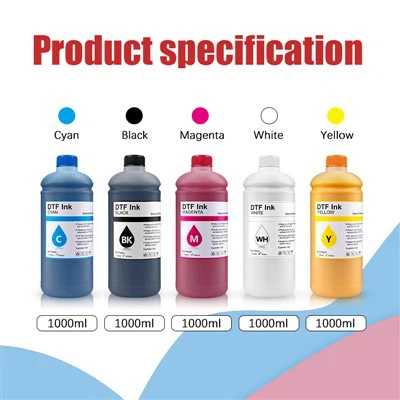
Hey there! As a supplier of DTF ink, I've seen firsthand the challenges that come with getting that ink to stick well on tough substrates. Whether you're printing on synthetic fabrics, treated materials, or other tricky surfaces, achieving good adhesion is crucial for a long - lasting and high - quality print. Today, I'm going to share some tips and tricks on how to improve the adhesion of DTF ink on difficult substrates.

Understanding the Problem
First off, let's understand why adhesion can be an issue on certain substrates. Difficult substrates often have smooth surfaces, low surface energy, or coatings that prevent the ink from bonding properly. For example, synthetic fabrics like polyester are known for being slick, and they may have finishes that resist ink penetration. Additionally, some treated surfaces can repel the ink due to their chemical properties.
Pre - treatment of Substrates
One of the most effective ways to boost ink adhesion is through substrate pre - treatment. This step can alter the surface properties of the substrate, making it more receptive to the DTF ink.
1. Plasma Treatment
Plasma treatment exposes the substrate to a low - temperature plasma environment. This process cleans the surface, removes contaminants, and increases the surface energy. Higher surface energy means the ink can spread and bond more easily. Specialized plasma treatment machines are available that can be used on a variety of substrates.
2. Corona Discharge
Similar to plasma treatment, corona discharge also increases the surface energy of the substrate. It works by creating a corona of ions that react with the surface molecules. This treatment is commonly used on plastic and film substrates. There are tabletop corona treaters that are relatively easy to use for small - scale operations.
3. Primer Application
Applying a primer is another great option. A primer creates an intermediate layer between the substrate and the ink. It can chemically bond with both the substrate and the ink, enhancing adhesion. There are different types of primers for different substrates. For instance, if you're printing on metal, you'll need a metal - specific primer. Just make sure the primer is compatible with the DTF ink you're using.
Selecting the Right DTF Ink
Not all DTF inks are created equal, especially when it comes to adhesion on difficult substrates. It's important to choose an ink that is formulated for the type of substrate you're working with.
1. Chemical Composition
Look for inks with a high - quality resin system. Resins play a key role in adhesion as they act as a binding agent. Some inks are formulated with special additives that improve wetting and spreading on difficult surfaces. For example, our Ocbestjet DTF Ink For Epson L1800 i3200 4720 is formulated with a unique resin blend that provides excellent adhesion on a wide range of substrates.
2. Viscosity
Viscosity also matters. Inks with the right viscosity can flow and adhere better to the substrate. Too thin of an ink may run off the surface, while too thick of an ink may not spread evenly. Good quality DTF inks usually have a viscosity range that is optimized for printing on various substrates.
Printing Process Optimization
The way you print can also have a big impact on ink adhesion.
1. Printing Resolution
Setting the right printing resolution is crucial. A too - low resolution may result in poor ink coverage, while a too - high resolution can cause ink pooling and uneven drying. Most printers have a recommended resolution for DTF printing. Experiment with different settings to find the one that gives the best adhesion for your substrate.
2. Drying and Curing
Proper drying and curing are essential for ink adhesion. After printing, make sure to dry the ink thoroughly. You can use a heat press or a specialized drying unit. The curing process further strengthens the bond between the ink and the substrate. Different inks have different curing requirements in terms of temperature and time. For example, some inks may need to be cured at a higher temperature for a shorter period, while others may require a lower temperature for a longer time.
Post - treatment for Adhesion
After the printing and curing process, there are some post - treatment steps you can take to improve adhesion.
1. Heat Pressing Again
Giving the printed substrate another quick heat - press can help to further embed the ink into the substrate. Make sure to use the correct temperature and pressure settings. Too much heat or pressure can damage the substrate or cause the ink to bleed, while too little may not have any effect.
2. Laminating
Laminating the printed area can add an extra layer of protection and improve the overall durability and adhesion. There are different types of laminates available, including clear and colored options. Just make sure the laminate is compatible with the ink and the substrate.
Our Product Range for Better Adhesion
We offer a wide range of DTF inks that are designed to provide excellent adhesion on difficult substrates. For example, our 500ML Film Transfer DTF Textile Ink is perfect for textile applications, even on synthetic fabrics that can be challenging to print on. And if you're looking for a larger quantity, our Ocbestjet 5 Liter Top Eva Name Tank Flo Dtf Transfer Shoes Taransfer Printer Ink For Epson 8550 L8050 P6000 Xp 600 Printhead is a great option for industrial - scale printing.
Conclusion
Improving the adhesion of DTF ink on difficult substrates is a combination of substrate pre - treatment, choosing the right ink, optimizing the printing process, and post - treatment steps. By following these tips, you can ensure that your prints have excellent adhesion and durability.
If you're interested in learning more about our DTF inks or want to discuss your specific printing needs, don't hesitate to reach out. We're here to help you achieve the best results with your printing projects.
References
- Smith, J. (2020). "Advances in DTF Ink Technology". Printing Industry Journal.
- Johnson, A. (2019). "Substrate Pre - treatment for Improved Ink Adhesion". Textile Printing Magazine.